
17 April 2026
Community + Environment · Three Years Running
For the third year running, members of the Vortex team have joined the Christchurch City Council’s community planting programme in the Ōtākaro Avon River Corridor. What started as a one-off contribution has become something more deliberate.
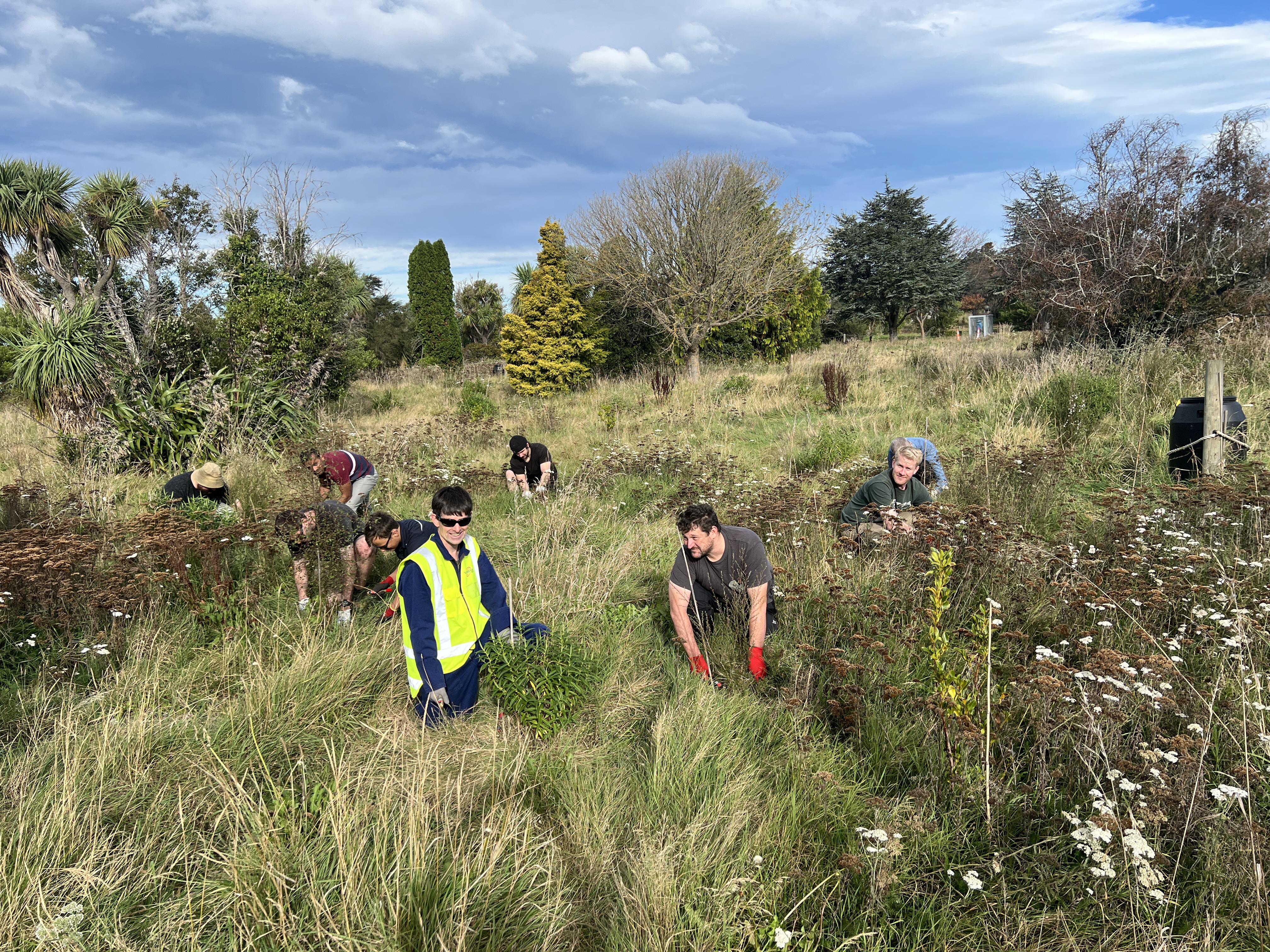
Vortex team at the Ōtākaro Avon River Corridor planting day, April 2026.
Before the 2010 and 2011 Canterbury earthquakes, the suburbs of Avonside, Dallington, Burwood, Wainoni and Bexley were everyday eastern Christchurch neighbourhoods: places of homes, schools, shops, and small parks. Beneath that familiar suburban landscape, however, was land that had been fundamentally altered since European settlement: wetland and podocarp forest drained, cleared, and built over.
When the earthquakes struck, the ground liquefied. Streets flooded with grey silt. In some places the land subsided by as much as a metre. The damage led to the removal of more than 5,000 homes from what is now the Ōtākaro Avon River Corridor, with the land eventually transferred into Christchurch City Council ownership for long-term regeneration.
More than a decade on, that land is in the middle of a slow and deliberate transformation. The Ōtākaro Avon River Corridor Regeneration Plan, approved in 2019, lays out a vision for 602 hectares of restored native habitat following the river from the city to the sea. At its core is the Green Spine: a corridor of native forest and wetland running eleven kilometres along both banks, designed to become one of the most ambitious urban native restoration projects in New Zealand. The council has committed to establishing an estimated four million shrubs, trees and grasses to achieve it.
“The restoration work along the Ōtākaro is not an act of decoration. It is an attempt to return something fundamental to the land.”
Those working on it are thinking in decades, not seasons.
Land That Has Already Been Through a Lot
To understand why native restoration in this corridor is genuinely challenging work, it helps to think about what the land has been through. Before becoming a suburb, much of this area was wetland and lowland forest. European settlers drained it, farmed it, then developed it into housing. The earthquakes then displaced the remaining soil structure further, pushing waterlogged, silty material up from depth.
The plants going into the corridor are eco-sourced from vegetation growing naturally in the local Canterbury lowlands — carrying genetic material suited to this specific climate, soil chemistry, and moisture regime, grown through the council’s own nursery at the Climate Action Campus. Planting a native species grown from the wrong regional provenance can produce a tree that looks right but performs poorly and does not support the same insect and bird communities as locally sourced material.
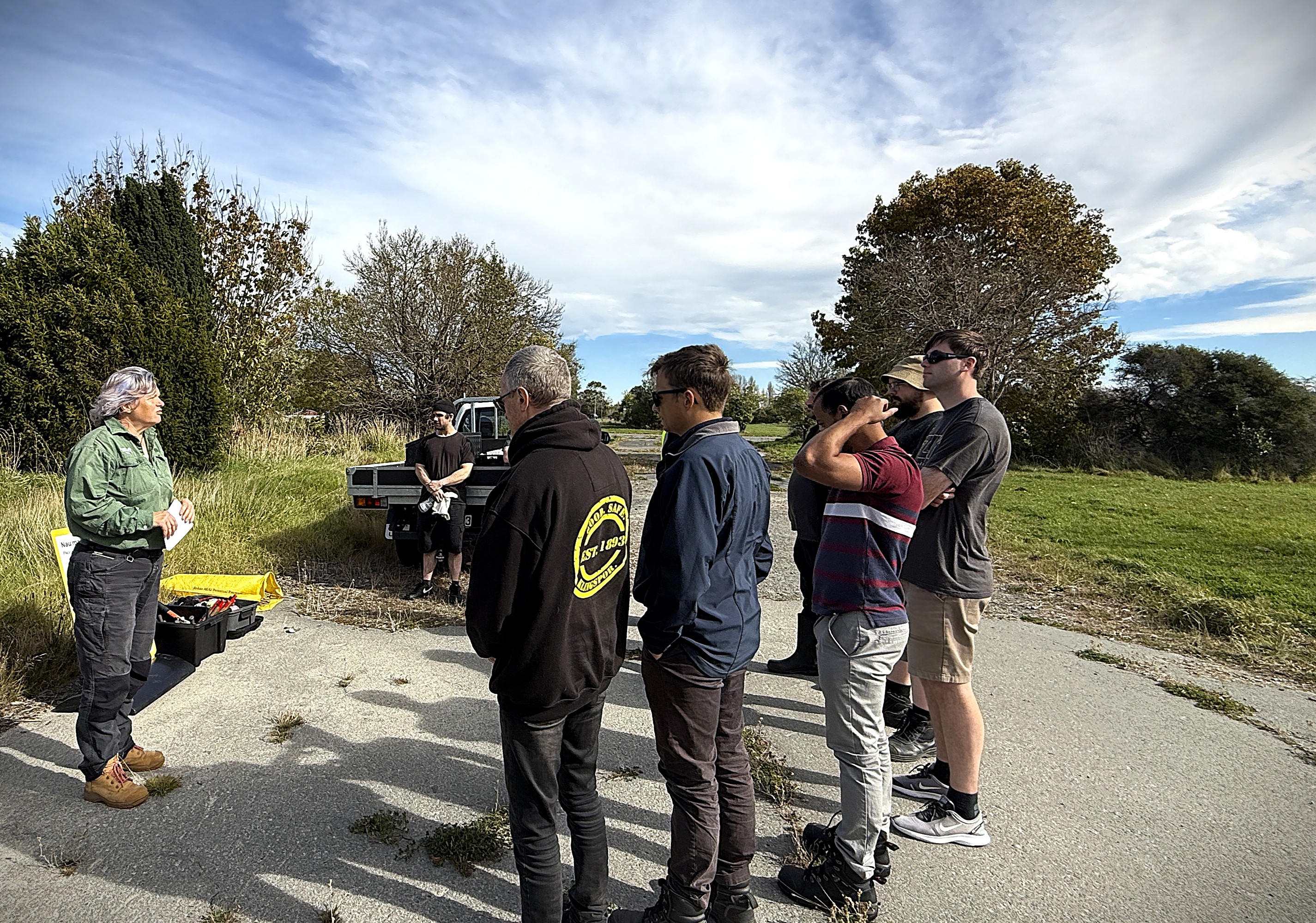
Part of the team being provided with instructions. |
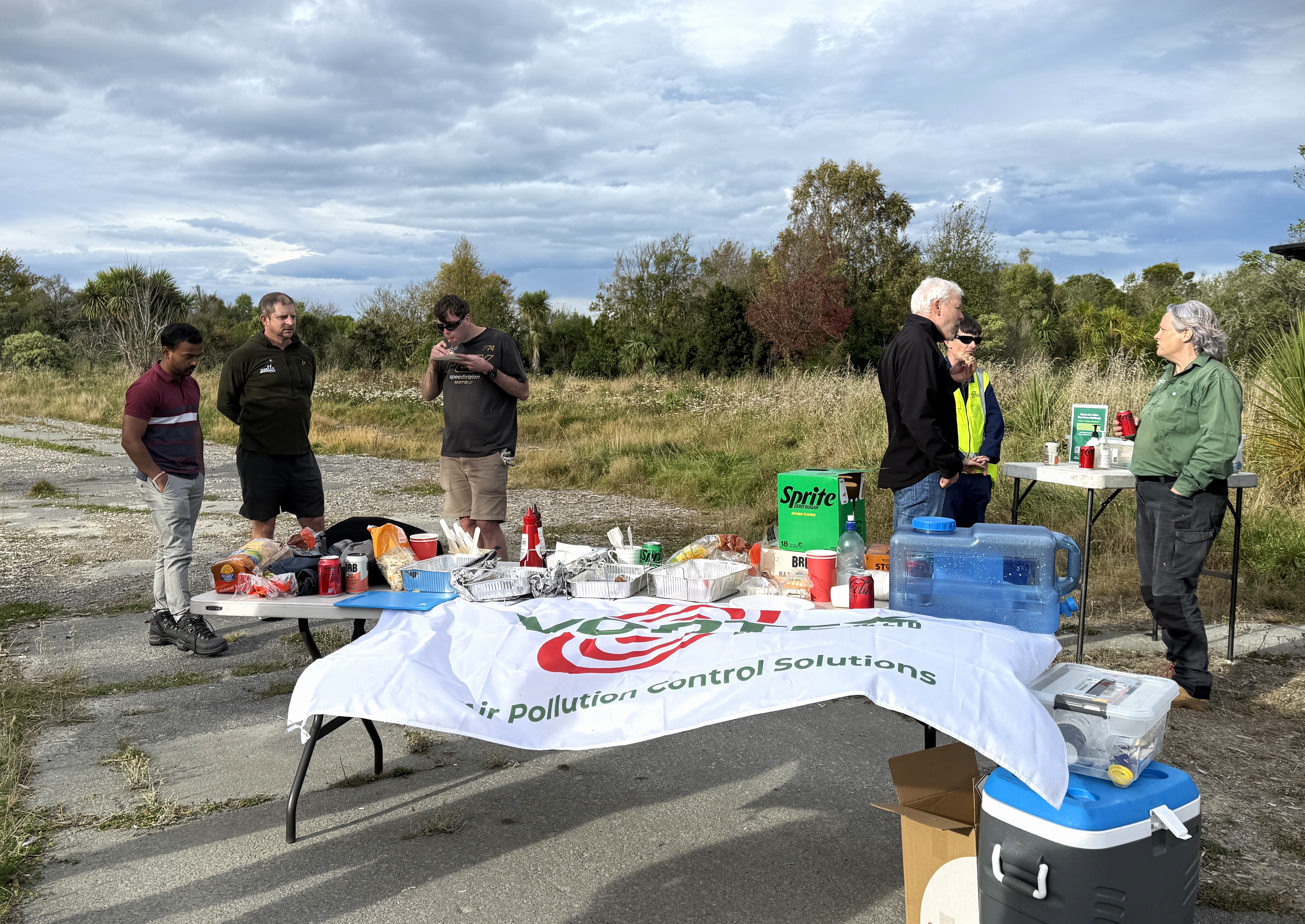
After a morning spent releasing and mulching young plants, the team was looked after with food as well. |
Ngāi Tūāhuriri and the Meaning of This Land
The land along the Ōtākaro is not simply a cleared residential zone. For Ngāi Tūāhuriri, who are mana whenua of this area, the awa has centuries of significance as a mahinga kai source. The name Ōtākaro itself — meaning the place of play — references the children who played on the banks while their families gathered food: eels caught from the shallows, flounder speared near the estuary, waterfowl taken from the wetlands.
Restoring native vegetation to the corridor is therefore not purely an ecological question. It is an act that reconnects the land to the relationships and practices that shaped it for far longer than the suburb that was cleared from it. Ngāi Tūāhuriri and the Christchurch City Council share oversight through a co-governance committee, and the mahinga kai values of the hapū are built explicitly into the regeneration plan.
The Ōtākaro Avon River Corridor — At a Glance
- 602 hectares from the central city to the estuary — about three-and-a-half times the size of Hagley Park
- Before the earthquakes, the corridor area contained more than 5,000 homes across eastern Christchurch
- The Canterbury Plains historically supported lowland podocarp forest, including kahikatea, tōtara and mataī, much of which was cleared after European settlement
- The Green Spine planting programme is expected to take decades, with the wider corridor likely to take 30 to 50 years to fully develop
- Ngāi Tūāhuriri hold mana whenua status in this area, and mahinga kai restoration is central to the regeneration plan
- When fully completed, the corridor could be home to around four million shrubs, trees and grasses
What We Were Asked to Do This Year
In previous seasons, the Vortex team took part in planting days, putting new trees in the ground. This year, the focus shifted to caring for what was already planted. Around each young plant, grass and weeds need to be removed by hand. A layer of mulch is then applied around the base of each tree to suppress regrowth and lock in moisture. This process — called plant release — is one of the determining factors in whether a planting event from the previous year actually becomes a forest, or gets swamped and lost in the first dry summer.
The work itself is unhurried. There is no machinery involved, no complex problem-solving. It is one person, one plant, and a straightforward set of actions repeated across a piece of ground that looks unremarkable now but will not always.
Vortex team — plant release day, Ōtākaro Avon River Corridor, April 2026.
On the Time It Takes
Ecological restoration at this scale asks for something that most modern projects do not: patience without expectation of witnessing the outcome. The kahikatea and tōtara planted in this corridor will grow slowly for the first several years, spending most of their energy establishing root systems before their above-ground growth becomes noticeable. The canopy that the regeneration plan envisions — a maturing native forest visible from the air and audible with birdsong — is thirty to fifty years away from the earliest plantings.
That changes what success looks like. Success here is not a finished result. It is a seedling that survived its first summer. A plant that got released before the grass smothered it. An afternoon spent doing something that adds, in a small way, to a programme that has the ambition and the funding and the governance structures to actually hold over the long term.
✦ ✦ ✦
Vortex Engineering has participated in the Ōtākaro Avon River Corridor community planting programme for three consecutive years. We are based in Christchurch. The regeneration of this corridor matters to this city, and we intend to keep turning up for it.
The Christchurch City Council red zone rangers run volunteer events throughout the autumn and winter planting season. If your organisation would like to take part: RRZRangers@ccc.govt.nz